Book Review - Final Winter
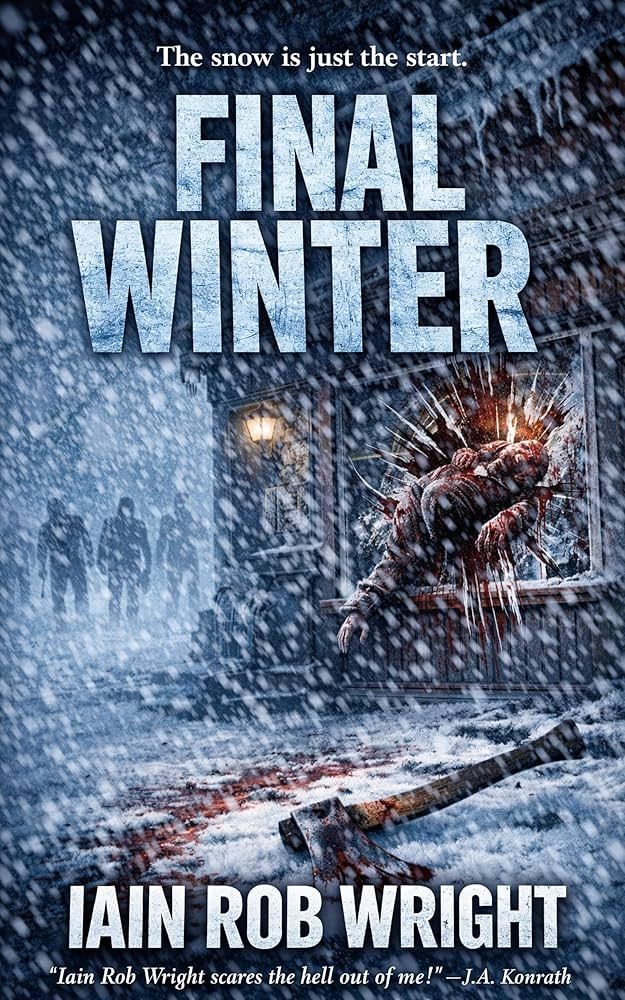
Final Winter by Iain Rob Wright begins as a simple survival story and gradually transforms into something far larger and more unsettling.
The novel opens during a brutal winter storm in a small English town. A group of strangers and regulars take shelter inside a local pub called The Trumpet, hoping to ride out the blizzard. But what begins as a harsh winter night quickly turns into something far more terrifying when strange figures begin appearing in the snow outside.
These towering beings, silent and relentless, surround the pub and begin demanding one thing:
“Send out the sinner.”
What follows is a tense and increasingly desperate struggle for survival as the group tries to understand what is happening — and more importantly, who the sinner might be.
Atmosphere and Tension
One of the book’s greatest strengths is its atmosphere. Wright builds tension brilliantly using isolation and uncertainty. The storm cuts the characters off from the outside world, and the claustrophobic setting of the pub creates a pressure cooker of fear, suspicion and paranoia.
The threat outside is both mysterious and terrifying. The beings in the snow are not typical monsters. They are patient, silent, and seemingly unstoppable. Their presence gives the novel a deeply unsettling tone that lingers throughout the story.
Characters
The cast of characters feels believable and varied. Each person trapped in the pub brings their own personality, secrets, and flaws into the situation. As tensions rise, the relationships between them become just as dangerous as the threat outside.
Harry, the novel’s central character, is particularly compelling. He is a deeply flawed man carrying enormous guilt and grief, and his emotional journey becomes the heart of the story.
Several supporting characters also stand out, especially Damien and Steph, whose roles add emotional depth to the unfolding nightmare.
Horror and Escalation
Without giving anything away, Final Winter evolves in ways that may surprise readers. What starts as a grounded survival horror gradually expands into something much bigger and more philosophical.
Wright blends psychological tension with supernatural horror, raising questions about guilt, justice, and whether humanity truly deserves redemption.
The story becomes less about simply surviving the night and more about confronting the consequences of our choices.
Final Thoughts
Final Winter is a gripping horror novel that combines claustrophobic tension, supernatural dread, and surprisingly emotional character moments.
It begins as a chilling survival story and grows into something much more ambitious.
Fans of apocalyptic horror and morally complex stories will find plenty to enjoy here.
⭐ Rating: 5 / 5
Spoiler Version - Major spoilers for the ending and key plot points below.
The True Nature of the Storm
One of the novel’s biggest twists is the revelation that the storm is not simply a natural disaster or supernatural anomaly.
Instead, it is a form of divine judgement.
The towering beings surrounding the pub are angels, sent to carry out God's decision to wipe out humanity after its “final sin.”
That final sin turns out to be Harry’s murder of the drunk driver who killed his wife and son.
The angels demand that the sinner be surrendered, and the entire night becomes a cosmic trial.
Lucifer’s Role
Perhaps the most surprising element of the story is the character of Lucas, who is eventually revealed to be Lucifer himself.
Rather than a villain, Lucifer acts as a strange guide and observer throughout the night. He provides information about what is happening while remaining bound by rules that prevent him from directly interfering.
His perspective adds an interesting twist to the traditional religious narrative. In this story, Lucifer appears almost sympathetic toward humanity, while Heaven’s judgement feels cold and absolute.
Harry’s Sacrifice
The emotional core of the novel arrives near the end when Harry chooses to accept the ultimate punishment.
After learning about the Abyss, a level of Hell so terrible that it was created specifically to punish Lucifer himself, Harry offers to take that punishment in exchange for the souls of all humanity.
Even after being shown a glimpse of the unimaginable suffering that awaits there, Harry refuses to back down.
It’s a powerful moment that transforms him from a broken, guilt-ridden man into someone willing to sacrifice himself for everyone else.
The Reset
Harry’s sacrifice ultimately convinces God to give humanity another chance.
Time resets to earlier that evening inside the pub. Everyone is alive again, the apocalypse has been undone, and the blizzard is simply another winter storm.
Only Harry remembers what happened.
Rather than wasting the second chance, he immediately begins making different choices. He reaches out to the people around him, offers Damien a chance to change his life, and asks Steph out on a date.
The ending shifts the story’s focus away from apocalypse and toward redemption.
Themes
The novel ultimately becomes a story about:
• guilt and forgiveness
• second chances
• whether humanity deserves redemption
• the power of self-sacrifice
Harry’s willingness to suffer in place of others echoes religious themes of atonement and redemption, giving the story a surprisingly hopeful ending.
Final Thoughts
The shift from survival horror into cosmic religious horror will not be for everyone, but it gives Final Winter a unique identity.
The ending transforms the story from a bleak apocalypse into a meditation on guilt, sacrifice, and the possibility of redemption.
Harry’s final choice elevates the book from simple horror into something far more emotionally resonant.
⭐ Final Rating: 5 / 5